
Master profit and loss statements to analyze revenue, control expenses, and make informed business decisions for consistent growth.
The Profit and Loss (P&L) statement, also known as the income statement, is one of the most important financial documents for this purpose. It provides a clear overview of your revenues, expenses, and net profit or loss over a specific period.
By mastering P&L statements, business owners can identify opportunities, control costs, and make strategic decisions that enhance profitability and sustainability. The following will Investment Ideas For Beginners discuss Mastering Profit and Loss Reports for Better Business Decision Making.
Understanding The Basics Of Profit And Loss Statements
A P&L statement summarizes your business’s financial performance over a given period, typically monthly, quarterly, or annually. It lists total revenues generated from sales, deducts the cost of goods sold (COGS), and subtracts operating expenses to calculate net profit or loss.
For beginners, it’s important to understand key components such as gross profit, operating profit, and net income. Gross profit is revenues minus COGS, operating profit accounts for operating expenses, and net income reflects the final profit after taxes and other deductions. Understanding these elements lays the foundation for better business insights.
Analyzing Revenue Streams
One of the main benefits of mastering P&L statements is the ability to analyze revenue streams. By breaking down income sources, business owners can determine which products or services contribute most to overall revenue.
This analysis allows for strategic decision-making. For instance, focusing on high-margin products, identifying underperforming areas, or adjusting pricing strategies can help increase profitability. A detailed understanding of revenues also enables better forecasting and planning.
Monitoring And Controlling Expenses
Expenses play a critical role in profitability. P&L statements provide insight into fixed and variable costs, including salaries, rent, utilities, and marketing expenses. By monitoring these costs, businesses can identify areas of overspending or inefficiency.
Controlling expenses does not necessarily mean cutting costs indiscriminately. Effective expense management involves analyzing which costs contribute to revenue generation and which can be optimized or reduced without affecting business operations.
Also Read: Beginner’s Guide: The Benefits of Compound Interest Investing
Using P&L Statements For Strategic Decisions
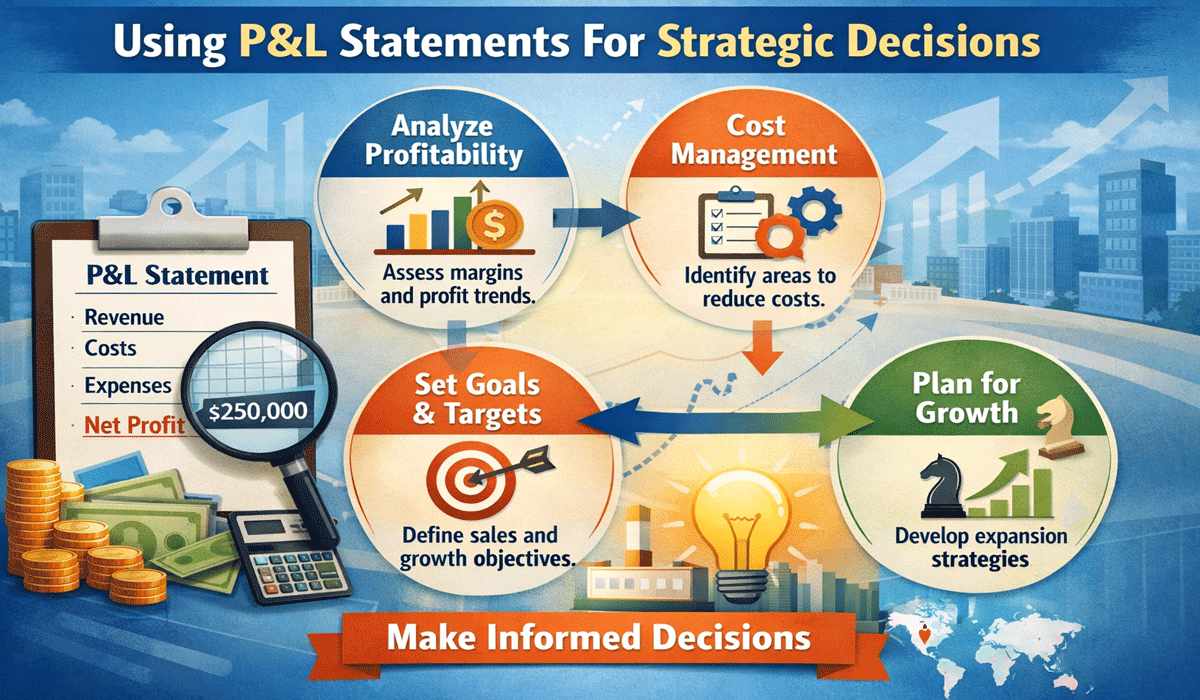
A well-understood P&L statement is more than a record of financial results; it’s a tool for strategic decision-making. Business owners can use it to set budgets, plan investments, and evaluate the financial impact of potential projects or expansions.
For example, if a particular department consistently increases revenue while keeping costs manageable, investing more in that area may yield higher returns. Conversely, consistently unprofitable areas may need restructuring or cost adjustments to improve overall financial health.
Forecasting And Business Planning
Mastering P&L statements also enables better forecasting and long-term planning. By analyzing trends in revenue and expenses over multiple periods, businesses can anticipate seasonal fluctuations, plan for growth, and make data-driven decisions.
Regular review of P&L statements helps business owners adjust strategies promptly. Whether it’s scaling operations, negotiating supplier contracts, or introducing new products, informed decisions based on accurate financial data enhance business stability and profitability.
Conclusion
Mastering Profit and Loss statements is essential for any business aiming for sustainable growth. By understanding revenues, controlling expenses, and analyzing trends, owners can make informed decisions that enhance profitability and operational efficiency.
While P&L statements alone do not capture every aspect of a business, combining them with other financial reports like balance sheets and cash flow statements provides a comprehensive view of financial health. Using these insights strategically helps businesses optimize performance, reduce risks, and achieve long-term success. Follow our page to catch all the newest info, only on Investment Ideas For Beginners.
Image Source From
- First Photo From: finally.com/blog
- Second Photo of: Investment Ideas For Beginners
