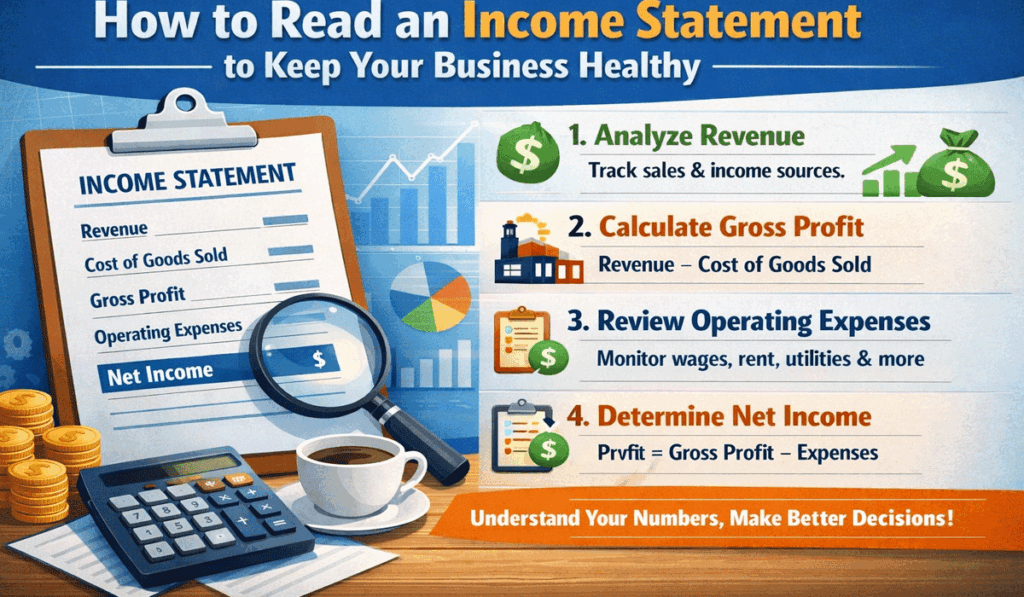

An income statement shows a business’s revenue, expenses, and profit, helping owners make informed, strategic financial decisions.
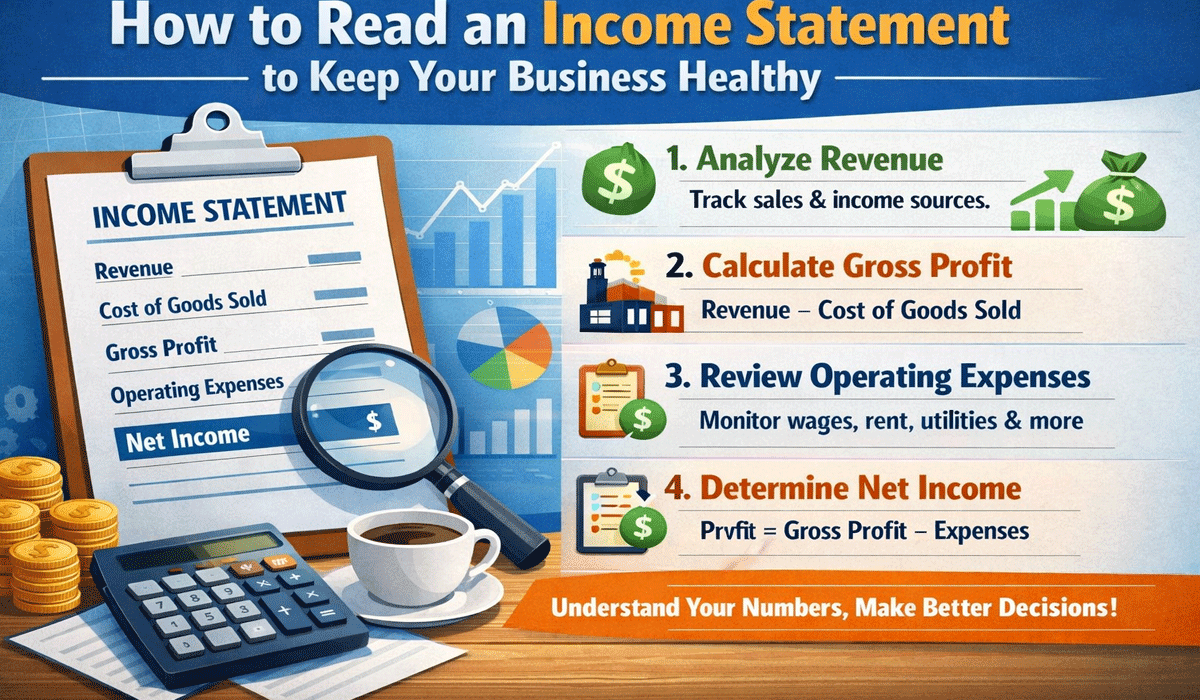
It provides a detailed view of revenues, expenses, and profits over a specific period, helping owners and managers understand financial performance. Reading it accurately allows businesses to make informed decisions, identify strengths and weaknesses, and maintain long-term financial health.
This article will Investment Ideas For Beginners guide you through the steps of reading an income statement to keep your business financially healthy. It covers understanding key components, analyzing revenue and expenses, monitoring profitability, spotting trends, and using insights to improve decision-making.
Understanding The Key Components
An income statement typically includes revenue, cost of goods sold (COGS), gross profit, operating expenses, and net profit. Each component tells a different story about your business’s financial performance. Revenue indicates the total money earned from sales, while COGS shows the direct costs associated with producing goods or services.
Gross profit, calculated as revenue minus COGS, highlights efficiency in production or service delivery. Operating expenses, including marketing, salaries, and rent, show the cost of running the business. Net profit represents the final bottom line after all expenses, providing a clear picture of overall profitability.
Analyzing Revenue Streams
Revenue analysis is crucial for understanding which products or services contribute most to your business. Breaking down revenue by category or department helps identify high-performing areas and underperforming segments that may need attention.
Regularly monitoring revenue trends allows business owners to adapt pricing strategies, optimize marketing efforts, and focus on the most profitable areas. Consistent growth in revenue streams indicates a healthy business, while declining revenue signals the need for strategic adjustments.
Evaluating Expenses Effectively
Careful analysis of expenses ensures that costs do not erode profits. Separate fixed expenses, which remain constant regardless of sales, from variable expenses that change with production or sales volume. Understanding these differences helps in budgeting and cost control.
Reviewing expense patterns regularly allows businesses to identify inefficiencies and areas where cost reduction is possible without impacting quality. Controlling expenses effectively increases net profit and strengthens financial stability.
Monitoring Profitability Ratios
Profitability ratios, such as gross profit margin and net profit margin, provide insight into the business’s efficiency and overall financial health. A high gross margin indicates strong production efficiency, while a healthy net margin reflects effective expense management.
Tracking these ratios over time helps owners spot trends and make informed decisions. Declining margins may signal increased costs or falling revenue, prompting corrective measures to maintain financial stability.
Using Insights for Decision-Making
The ultimate goal of reading an income statement is to make smarter business decisions. Use insights from revenue, expense, and profitability analysis to plan budgets, set growth targets, and optimize operations.
Regularly reviewing income statements also helps prepare for taxation, secure financing, and evaluate investment opportunities. By leveraging this information, businesses can make proactive decisions that ensure long-term financial health.
Conclusion
Reading an income statement accurately is essential for keeping a business financially healthy. Understanding revenue, expenses, and profits provides clear insight into performance, highlights areas for improvement, and guides informed decision-making.
By regularly analyzing income statements, monitoring trends, and applying insights to operational strategies, business owners can maintain stability, increase profitability, and ensure sustainable growth over time. Keep following the information so that you don’t miss the next information, only available at Investment Ideas For Beginners.
Image Source From.
- First Photo From: Investment Ideas For Beginners
- Second Photo of: imarticus.org