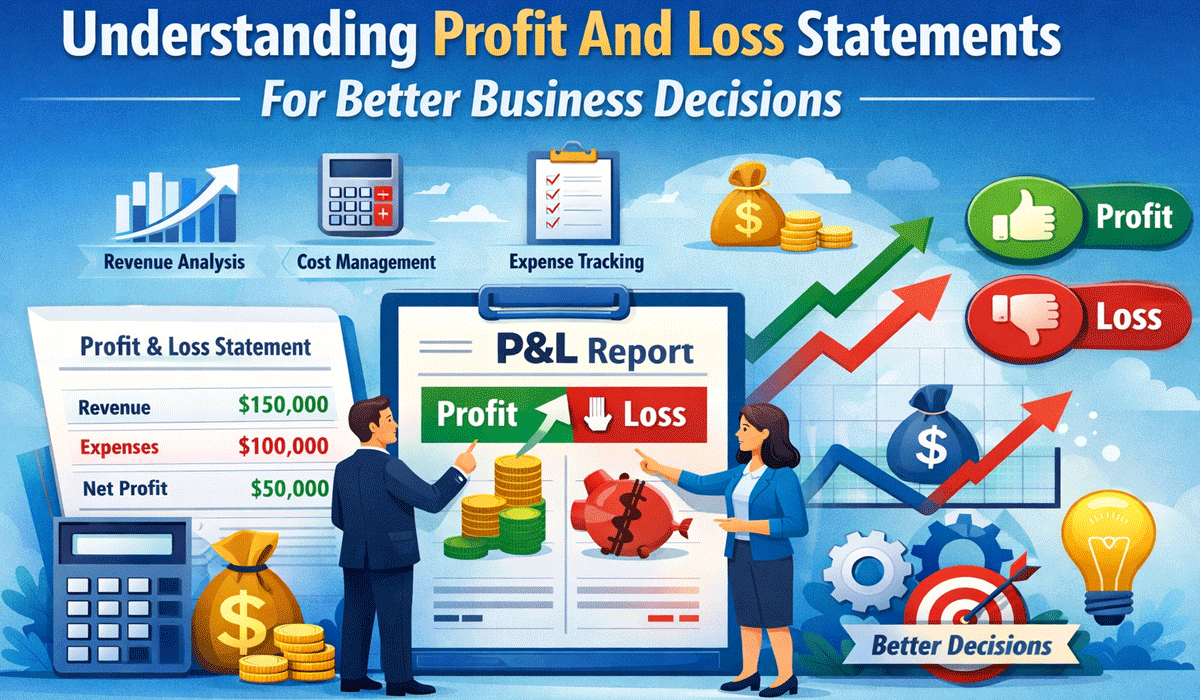
Learn how to read profit and loss reports effectively to make smarter investment decisions and avoid costly financial mistakes.

Understanding how to read a profit and loss (P&L) report is one of the most important skills for anyone who wants to invest wisely.
Many investors lose money not because they choose the wrong market, but because they fail to understand the financial health of the companies they invest in. Below, Investment Ideas For Beginners will provide interesting information that you must know.
Understanding Revenue As The Starting Point Of Analysis
Revenue is the first and most visible number in a profit and loss report. It represents the total income a company generates from its business activities before any expenses are deducted. While high revenue may seem attractive, it does not always indicate a strong company.
Investors must check whether revenue is consistently growing over time or fluctuating unpredictably. Stable and increasing revenue often suggests strong demand for a company’s products or services, while declining revenue may signal underlying problems that could affect future performance.
Evaluating Expenses To See The Real Cost Of Business
After revenue, expenses play a crucial role in determining profitability. These include costs such as production, salaries, marketing, and administrative expenses. A company might generate high revenue but still struggle if its expenses are too large.
Investors should pay attention to whether expenses are growing faster than revenue, as this could reduce future profits. Efficient cost management is often a sign of a well-run company, while uncontrolled expenses may indicate poor financial discipline.
Examining Gross Profit And What It Reveals
Gross profit is calculated by subtracting the cost of goods sold from revenue. This figure helps investors understand how efficiently a company produces and sells its products. A high gross profit margin means the company retains more money from each sale, which is generally a positive sign.
However, a declining gross profit margin over time may suggest rising production costs or pricing pressure in the market. By analyzing this section, investors can determine whether the company has a sustainable business model.
Read Also: Smart Start How Beginners Can Grow Their Wealth in the Stock Market
Understanding Net Profit As The True Measure Of Success
Net profit is often considered the most important figure in a P&L report because it shows the actual earnings after all expenses, taxes, and interest are deducted. This number reflects the company’s true profitability.
A company with strong revenue but weak or negative net profit may not be financially healthy. Investors should also compare net profit over multiple periods to identify trends. Consistent growth in net profit usually indicates strong management and a stable business strategy.
Using Profit And Loss Trends To Make Smarter Investment Decisions
Looking at a single profit and loss report is not enough; investors must analyze trends over time. Comparing multiple reports helps identify whether a company is improving or declining.
A consistent upward trend in revenue and net profit is often a positive signal, while irregular or declining patterns may be a warning sign. By studying these trends, investors can make more informed decisions and reduce the risk of investing in unstable companies.
In conclusion, reading a profit and loss report is not just about numbers but about understanding the story behind a company’s performance. Investors who master this skill are better equipped to make smart, confident, and profitable investment decisions. Watch and keep following, don’t miss the most complete information regarding Investment Ideas For Beginners.