A clear guide to mastering the stock market, from basics to advanced strategies, helping beginners grow into confident and successful investors.
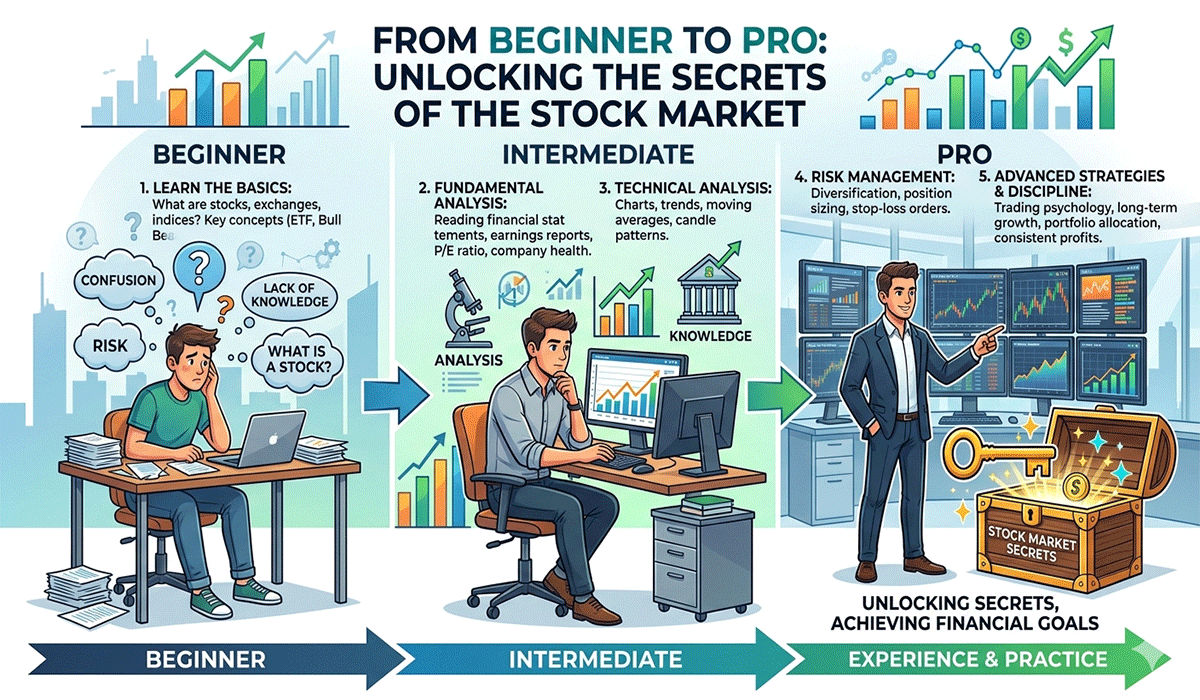
The stock market is a dynamic platform where investors buy and sell shares of publicly listed companies. For beginners, understanding how the market works is the first essential step. Stocks represent ownership in a company, and their prices fluctuate based on supply, demand, and overall market sentiment. Learning key concepts such as market capitalization, dividends, and price-to-earnings ratios can help new investors build a strong foundation before making their first investment.
In addition, beginners should familiarize themselves with how stock exchanges operate and the role of brokers. Modern technology has made trading more accessible than ever, allowing individuals to participate through online platforms. However, accessibility does not guarantee success. Without proper knowledge and discipline, new investors may find themselves overwhelmed.
Below, STOCK MARKET will provide some explanations regarding Reinventing Learning Systems for an Innovation-Driven Future.
Developing Smart Investment Strategies
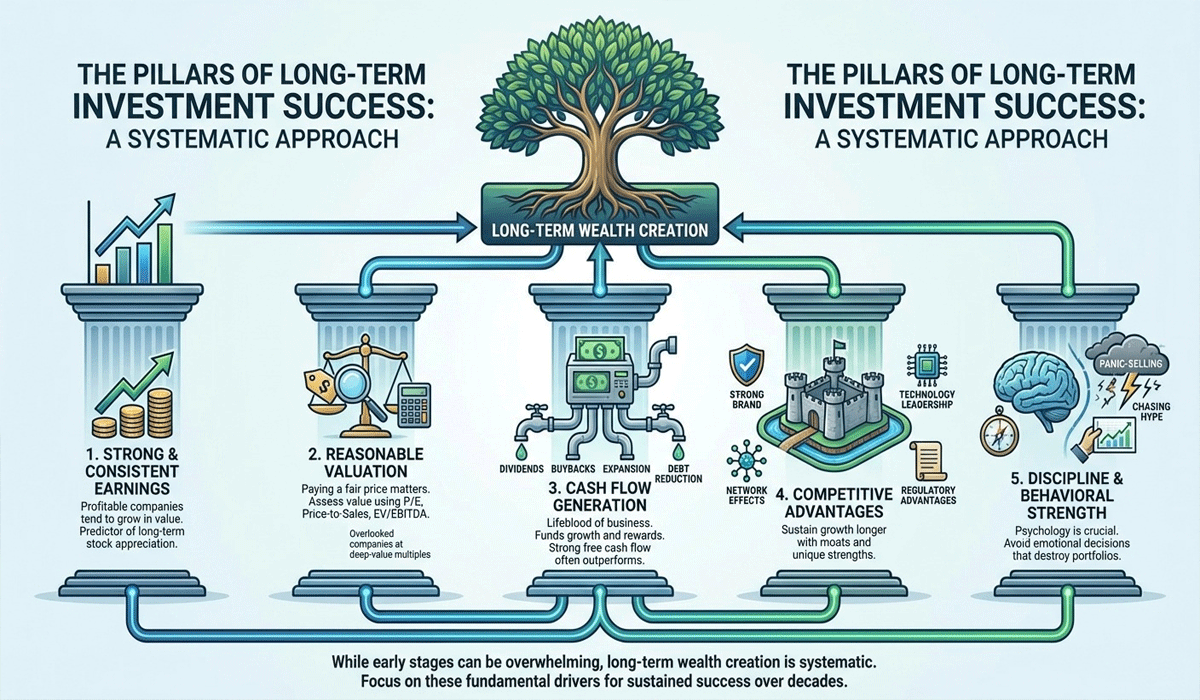
Once the fundamentals are understood, the next step is developing a solid investment strategy. Successful investors do not rely on luck; instead, they use research, analysis, and long-term planning. One popular approach is value investing, where investors seek undervalued stocks with strong fundamentals. Another strategy is growth investing, focusing on companies with high potential for expansion and future earnings.
Diversification is also a key principle in minimizing risk. By spreading investments across different sectors and industries, investors can protect themselves from major losses if one area underperforms. Additionally, setting clear financial goals and risk tolerance levels helps guide decision-making. A disciplined approach, combined with patience, often separates successful investors from those who struggle in the market.
Mastering Market Analysis Techniques
To move from beginner to advanced levels, investors must learn how to analyze the market effectively. There are two primary methods: fundamental analysis and technical analysis. Fundamental analysis involves evaluating a company’s financial health, including revenue, profit, and growth potential. This approach helps investors determine whether a stock is worth buying for the long term.
Technical analysis, on the other hand, focuses on price patterns, trends, and trading volume. By studying charts and indicators, traders attempt to predict future price movements. While no method guarantees success, combining both approaches can provide a more comprehensive understanding of market behavior. Continuous learning and adapting to new information are essential for staying competitive in the ever-changing stock market environment.
Also Read: Smart Start How Beginners Can Grow Their Wealth in the Stock Market
Managing Risks And Emotions In Trading

One of the biggest challenges in stock market investing is managing risk and controlling emotions. Market volatility can trigger fear and greed, leading to impulsive decisions. Successful investors understand the importance of maintaining emotional discipline and sticking to their strategies, even during uncertain times. Setting stop-loss limits and having an exit plan are practical ways to protect investments from significant losses.
Risk management also involves understanding that losses are a natural part of investing. Instead of trying to avoid losses completely, experienced investors focus on minimizing them while maximizing potential gains. Keeping a balanced mindset and avoiding overtrading can significantly improve long-term performance. Emotional control, combined with a well-structured plan, is a key factor in achieving consistent success.
Conclusion
Becoming a successful stock market investor is a journey that requires knowledge, patience, and discipline. From understanding the basics to developing strategies and mastering analysis techniques, each step plays a crucial role in shaping an investor’s success. While the market offers great opportunities for wealth creation, it also comes with risks that must be managed carefully.
Ultimately, the transition from beginner to professional investor is not achieved overnight. It requires continuous learning, adaptability, and a strong mindset. By staying informed, practicing disciplined investing, and maintaining emotional control, anyone can unlock the secrets of the stock market and build a solid financial future.
For the latest and most interesting related information, you can also click the TEACHING link.
Image Source:
First Image from oxfordbookstore.com
Second Image from wikihow.com