Entering the capital market can feel thrilling yet overwhelming for beginners, like stepping into a world full of opportunities.
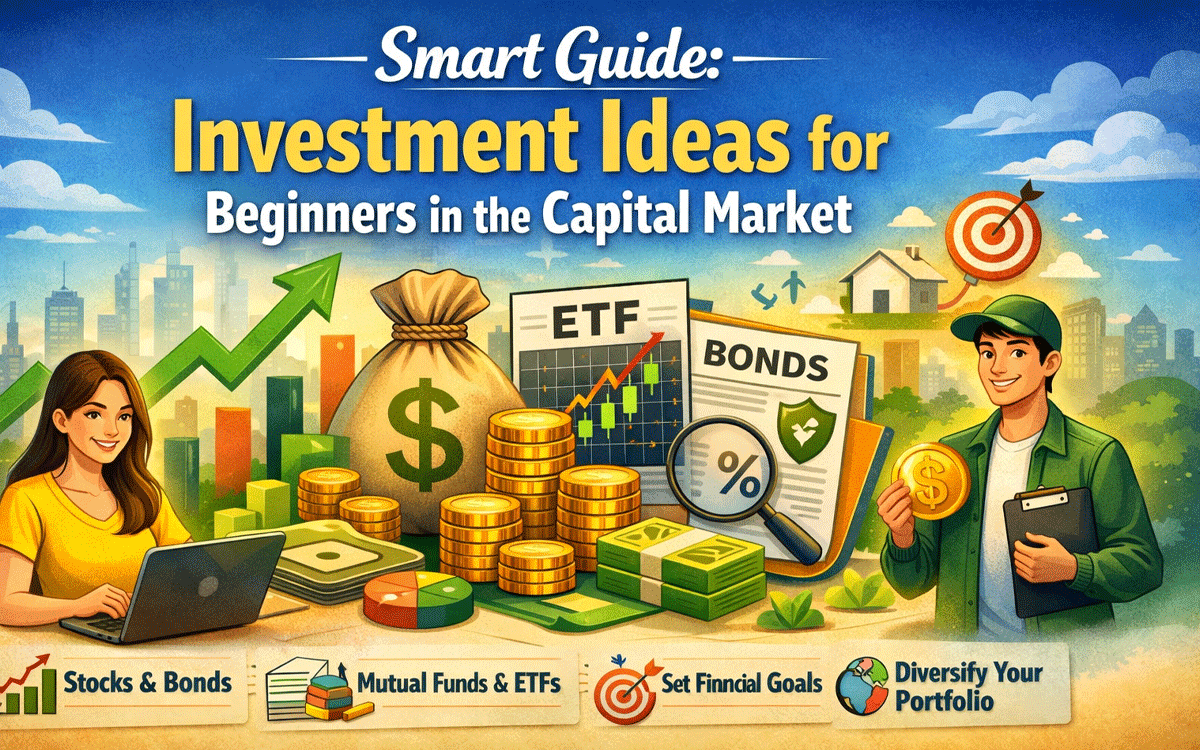
Stocks, bonds, mutual funds, and ETFs may seem complex at first, but they offer exciting opportunities for wealth growth. With the right strategies and a learning mindset, even first-time investors can confidently navigate this financial landscape and make smart decisions.
Below we Investment Ideas For Beginners will discuss various investment strategies suitable for beginners, including stocks, bonds, and mutual funds, which you can learn more about on our investment guide page.
Understanding the Capital Market
The capital market is where companies raise funds to grow, and investors have opportunities to increase wealth. Stocks, bonds, and ETFs are primary tools. Learning how each works is essential for building a strong foundation.
Stocks represent partial ownership in a company. When the company grows, the stock value rises. Investors may also earn dividends. This combination of capital gains and income makes stocks appealing for long-term wealth building.
Bonds are debt instruments. Investors lend money to companies or governments in exchange for fixed interest payments. Bonds typically carry lower risk than stocks, offering stability and predictable income. Including bonds can reduce overall portfolio volatility.
Setting Financial Goals
Before investing, define clear financial objectives. Short-term goals, like saving for a gadget or a vacation, often require lower-risk options. Long-term goals, such as retirement or a home purchase, allow more aggressive investments.
Budgeting is crucial. Decide how much money can be invested without compromising daily needs. Even small, consistent investments can grow significantly over time due to compounding, a powerful wealth-building principle.
Understanding your risk tolerance is essential. Each investment carries some risk. Assessing personal comfort levels helps avoid panic-selling during market volatility and ensures investment strategies align with long-term financial goals.
Exploring Investment Options
Mutual funds pool money from multiple investors to invest in diversified portfolios. Managed by professionals, they reduce the burden of research for beginners while providing exposure to a wide range of assets.
ETFs are similar to mutual funds but trade on stock exchanges. They offer flexibility, lower fees, and sector-specific exposure. Beginners can start with broad-market ETFs to learn how markets move without concentrating risk in one company.
Individual stocks allow direct control over investments. Beginners should research companies, industries, and market trends before buying. Starting with established, well-known companies reduces risk while providing valuable learning experience about market behavior.
Other options include government bonds, REITs (Real Estate Investment Trusts), and index funds. Each has unique benefits. Diversifying across multiple instruments can increase security and reduce dependence on a single asset.
Read Also: Boost Your Wealth Fast with Smart Investing
Strategies for Smart Investing

Start small and invest regularly. Consistent contributions benefit from compounding, which can significantly boost returns over time. Patience and discipline are key, especially for beginners.
Diversification reduces risk. Spread investments across different sectors, countries, and asset types. Combining stocks, bonds, and ETFs protects the portfolio from sudden market fluctuations, ensuring steadier growth over time.
Stay informed but avoid reacting to every market headline. Short-term fluctuations are normal. Focus on long-term trends and keep emotions in check. Developing a calm, rational approach prevents costly impulsive decisions.
Dollar-cost averaging is a useful tactic for beginners. Investing a fixed amount at regular intervals reduces the impact of market volatility. This approach ensures you buy more shares when prices are low and fewer when prices are high.
Conclusion
Investing in the capital market requires patience, knowledge, and strategy. By setting goals, understanding instruments, and applying smart methods, beginners can build a strong financial foundation.
The journey is gradual. Consistent investments, diversification, and continuous learning enhance confidence. Over time, beginners can achieve wealth growth, financial stability, and independence, turning initial hesitations into long-term success.
Start early, stay disciplined, and embrace learning. With dedication and informed decisions, the capital market becomes an exciting arena for financial growth, offering beginners both opportunity and empowerment.
For more information on how to start investing and tips from experts, visit Investment Ideas For Beginners and study their trusted investment guide.
Image Source:
- First Image tarunblogs.com
- Second Image thecuriousscientist.in